For survivors of trafficking in persons, justice is not only about convicting perpetrators. It is also about recognition, repair, and recovery. Restitution – compensation ordered by courts to address the harm suffered by victims and paid by offenders – is one of the most powerful tools available to help survivors rebuild their lives. Yet across Southeast Asia, restitution has often been applied inconsistently, limiting its impact and leaving many victims without meaningful redress. Similar challenges have been identified across ASEAN Member States, where differences in legal frameworks, judicial practice, and enforcement capacity continue to affect victims’ access to restitution.
In Indonesia, this implementation gap has been particularly evident. While national laws clearly recognise restitution as a right of trafficking victims, court practice has varied widely. Under Law No. 21 of 2007 on the Eradication of the Criminal Act of Trafficking in Persons, victims are entitled to seek restitution as part of criminal proceedings against perpetrators. However, ASEAN-ACT’s analysis of trafficking in persons cases in Indonesia highlights that restitution is frequently not ordered or not enforced, even in cases where victims’ losses are clearly documented. This mirrors broader research based on court data which shows that although more than 1,000 trafficking cases and over 3,300 victims were recorded in 2023, only a small proportion of assessed restitution has been awarded or paid – estimated at around 13 per cent of total calculated losses. For many survivors, this means leaving the justice system without compensation for the severe harms they have endured.
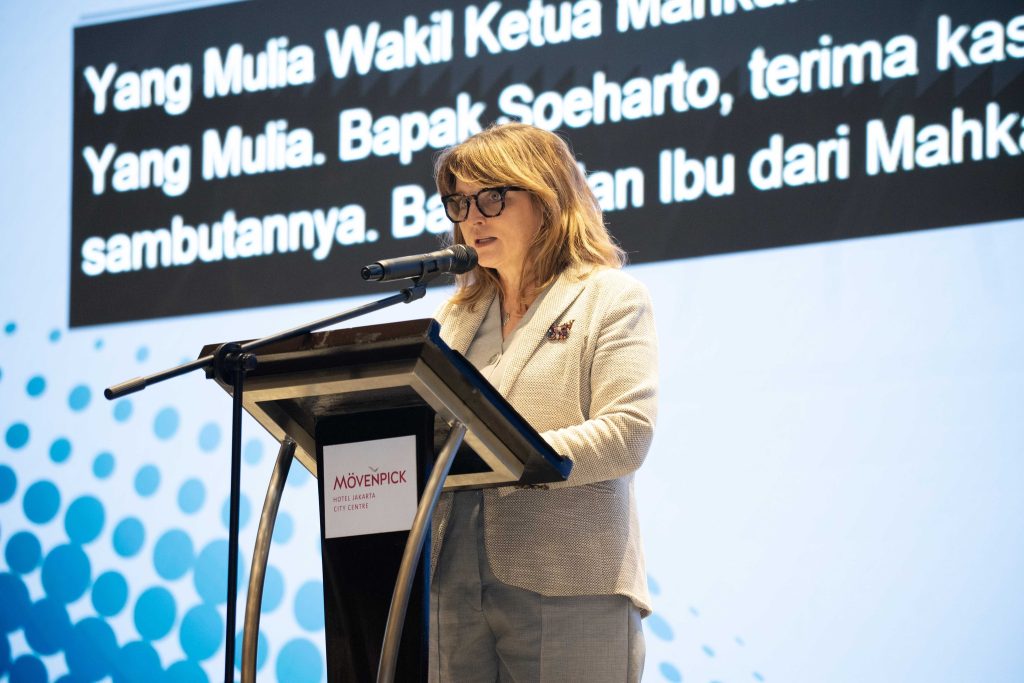
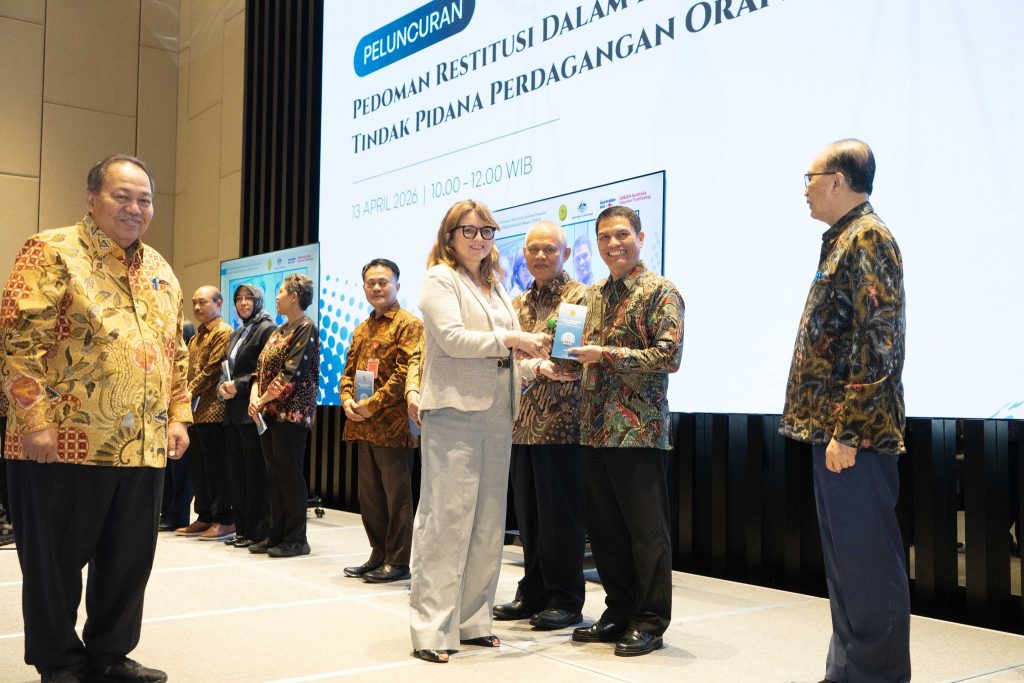
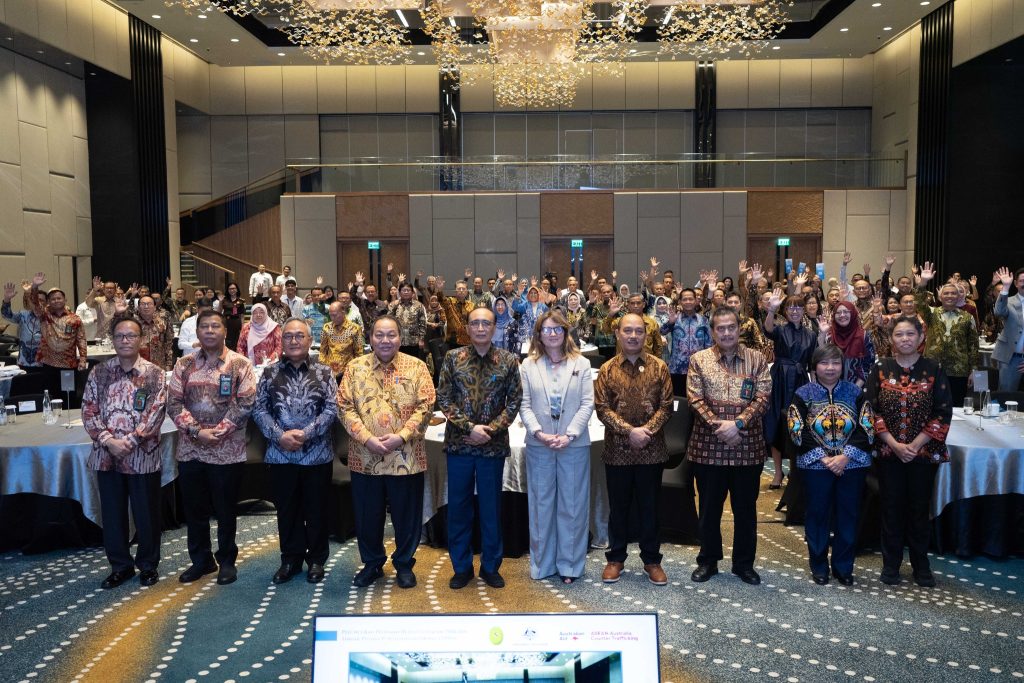
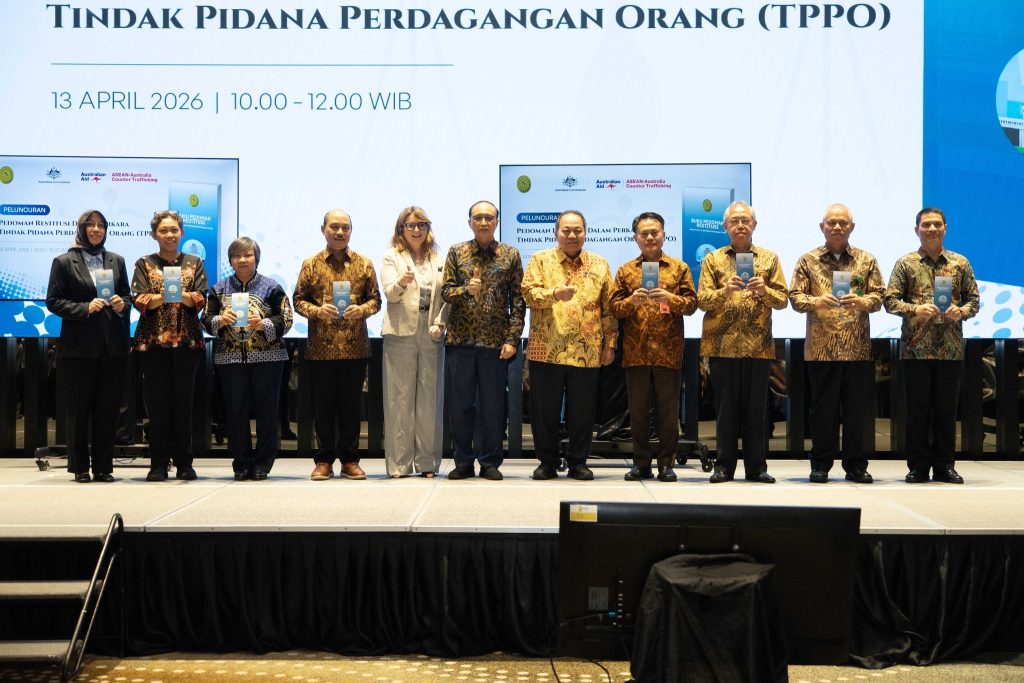
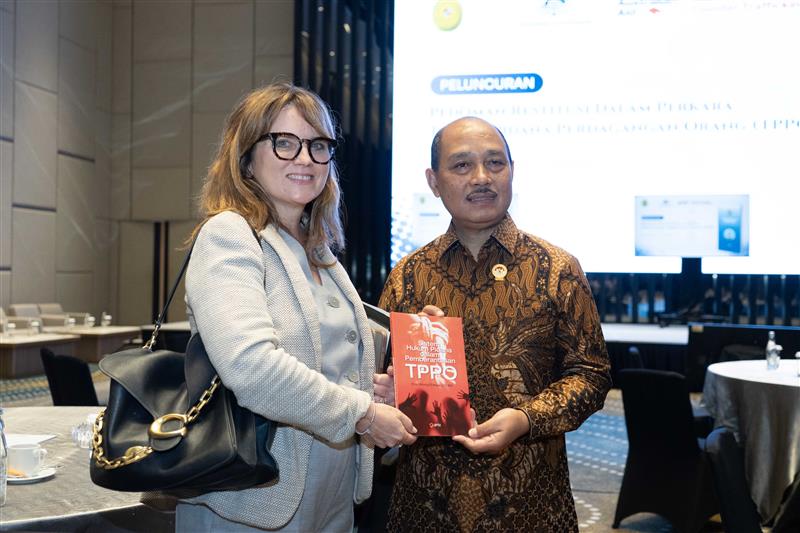
On 13 April 2026, the Supreme Court of Indonesia took a significant step to address this challenge by launching new judicial guidelines on restitution in trafficking in persons cases, developed with the support of the Australian Government funded ASEAN-Australia Counter Trafficking Program.
From Law to the Courtroom: Why Guidance Matters
Indonesia’s legal framework — including Law No. 21 of 2007 on the Eradication of the Criminal Act of Trafficking in Persons and Supreme Court Regulation No.1 of 2022 concerning procedures for restitution and compensation for victim of criminal offences — provides a strong legal basis for victim’ rights to restitution. Regionally, these obligations are reinforced by the ASEAN Convention against Trafficking in Persons, Especially Women and Children (ACTIP), which commits ASEAN Member States to ensuring access to remedies and compensation for victims of all forms of trafficking.
In practice, however, judges and law enforcement agencies face persistent challenges in applying these provisions. These include difficulty in identifying and calculating victims’ losses, uncertainty regarding procedural requirements, and obstacles in enforcing restitution orders, particularly where perpetrators lack assets, conceal proceeds, or evade responsibility.
The new guidelines position restitution as a core judicial obligation, rather than a discretionary add‑on to sentencing. It provides judges with clear, practical direction on when and how restitution should be considered, calculated, and ordered in trafficking cases.
Importantly, the guidelines also acknowledge the evolving legal landscape in Indonesia concerning broader victim recovery mechanisms. While restitution under the anti-trafficking framework remains principally perpetrator-funded and linked to criminal proceedings, victims of trafficking who were subjected to sexual exploitation may also benefit from additional protections and recovery mechanisms available under Law No. 12 of 2022 on Sexual Violence Crimes. These include forms of state-funded assistance and victim recovery measures, including mechanisms associated with the Victim Assistance Fund and services facilitated through relevant victim protection institutions.
Evidence‑Based and Victim‑Centred
The guidelines build on an existing judicial and implementing regulation governing restitution and compensation for victims of criminal offences, while providing more specific instructions for judges on trafficking in persons cases. It reflects strong evidence showing that trafficking causes complex and long‑term harm, including loss of income, medical and psychological costs, temporary and long-term impairments, social stigma, and barriers to education and employment.
The development of the guidelines was informed by consultations held since the establishment of Supreme Court Regulation No 1 of 2022 concerning restitution and compensation for victims of criminal offences with judges particularly the Supreme Court’s Working Group on Women and Children. These consultations drew on national research experience highlighting the need for standardised approaches to restitution assessment and clearer guidance to support judicial decision‑making.
By providing structured guidance on assessing losses, issuing enforceable orders, and prioritising victims’ recovery needs, the guidelines promote consistency, legal certainty, and fairness across trafficking cases – this is key to strengthening public confidence in the justice system.
How the Guideline Will Be Implemented
Implementation will focus on ensuring the guidelines are not only adopted in principle but actively used across Indonesia’s courts. The Supreme Court will integrate the guidance into judicial practice through dissemination across judicial networks and incorporation into training and reference materials for judges handling trafficking cases.
Targeted capacity building initiatives, including judicial dialogues and technical assistance, will further support judges to apply the guideline in complex, real-world cases. This includes strengthening understanding of victim‑centred approaches, improving coordination with prosecutors and victim support institutions, and enhancing engagement with the Victim Assistance Fund.
Over time, the guidelines are expected to contribute to more consistent restitution outcomes, greater accountability for perpetrators, and increased confidence among victims of trafficking that Indonesia’s justice system can deliver substantive results.