For many working in counter trafficking, policy reform can feel far removed from the frontline realities of supporting survivors, coordinating referrals, and strengthening services.
Analysis of trafficking cases in Indonesia, including a review of court decisions from 2019–2021, shows gaps in victim‑centred approaches, limited access to restitution, and inconsistencies in how cases are handled. Even where legal frameworks exist, outcomes for victims depend heavily on how well institutions work together and apply them in practice.
Yet the story of Yayasan ‘Sakura’ Indonesia Al Jamaan in Bogor suggests something different. It shows how local action, when sustained and inclusive, can move from supporting individual cases to influencing the rules that govern their lives.
From community response to collective practice
Yayasan Sakura grew out of grassroots organisations focused on social welfare, community development, women’s empowerment and child protection. By the time it formally became a foundation in 2019, Sakura was already drawing on years of direct engagement with vulnerable communities. The teams’ understanding of trafficking emerged from the lived experiences of the people they supported – where exploitation was rarely driven by a single factor, but by overlapping vulnerabilities such as poverty, lack of education and decent work options, gender inequality, and disability.
Across Southeast Asia, persons with disabilities face heightened risk of all forms of trafficking to due persistent stigma and limited access to services, education and employment – conditions that traffickers exploit. For Sakura, these dynamics were not abstract; they were visible in everyday cases. As founder Suarni Daeng Caya explains, “We did not design a big system from the beginning. We responded to what communities needed and we realised the problems were all connected.”
Through a grant partnership with the Australian Government funded ASEAN-Australia Counter Trafficking program (ASEAN-ACT), Sakura strengthened this approach by focusing on coordination across government and non-government actors and inclusion of a broader range and of voices in the policy making process. In Bogor, this led to the creation of a multi-stakeholder consortium bringing together government agencies, civil society organisations, disability advocates and community groups. What began with 35 members grew to 48 organisations by April 2026, reflecting both demand and trust in the model.
The consortium became more than a network; it became a social movement and platform for shared learning and problem solving across organisations with common missions and shared challenges.
Through a series of consultations, the consortium developed disability-inclusive guidelines for preventing and responding to trafficking, initially designed for Bogor Regency, but later gaining the attention of the National Commission for Disability as policy makers in Jakarta quickly realised the broader relevance of the guidelines.
Coordination across NGOs and with local government has improved over time, with consortium members all playing different roles while being united in their focus on inclusion and accessibility. Case handling is also becoming more effective and efficient due to the strong relationships across the network.
From coordination to policy influence
In Bogor, coordination evolved into something more powerful: a collective voice for reform. “One organisation can advocate,” Ibu Suarni notes, “but when many actors see the same reality and speak together, it becomes harder for systems to stay the same.” Through regular dialogue, members of the consortium began to align their perspectives, identify systemic gaps, and present these insights with greater authority.
This collective lens was particularly important in advancing disability inclusion in counter-trafficking, a nexus previously ignored in Indonesia and across the ASEAN region. By ensuring that organisations of persons with disabilities were meaningfully included, the consortium surfaced critical gaps in victim identification, accessibility of services, and institutional responses.
This frontline experience led to the development of new Guidelines on the Disability Inclusive Prevention and Handling of Trafficking in Persons, which have been endorsed by several national government agencies with key roles in counter trafficking. The guidelines will help organisations to recognise that trafficking affects individuals differently and highlights barriers such as stigma and gaps in services and data. Consultation with disability groups have now led to practical changes such as inclusive referral processes, more accessible information and an integrated service for the reported cases.
Drawing on real cases and collective advocacy, the consortium contributed to discussions shaping Bogor Regency’s forthcoming regulation on the rights of persons with disabilities, which while not strictly about counter trafficking will serve as a powerful tool to prevent all forms of exploitation of persons with disabilities What influenced policy was not a single moment of advocacy, but the accumulation of evidence, relationships, and aligned voices that made system gaps visible – and difficult to ignore.
“Policy changes when reality becomes visible and when there are enough people who cannot ignore it anymore,” Ibu Suarni reflects.
At the national level, the Bogor experience has informed discussions for Indonesia’s upcoming National Action Plan on Trafficking (2025-2029). By acting as a bridge between organisations of persons with disabilities and policymakers, the consortium has helped ensure that inclusion is reflected in broader priorities.
Frameworks such as the ASEAN Convention Against Trafficking in Persons, Especially Women and Children (ACTIP) depend on effective implementation at national and local levels. Bogor’s experience demonstrates that progress is often driven not by top-down policy alone, but by locally grounded, coordinated efforts – supported by regional partnerships – that translate commitments into practice.
As is the case with all complex issues that require changes in law, policy and practice, Sakura’s journey has not been without its challenges. Coordination requires time, trust, and sustained resources. Limited access to disability-friendly format IEC materials for preventing human trafficking, communication barriers, limited services that meet accessibility requirements and data gaps continue to be challenges. Capacity gaps remain, particularly in handling complex cases involving trafficking and disability. These challenges are common across the sector. Yet something has shifted. Actors are working more coherently, inclusion is increasingly recognised as essential, and local experience is beginning to shape how systems are governed.
Change did not begin with an ambition to influence policy. It started with responding to real needs, evolved into recognising systemic patterns, and was strengthened through partnerships that amplified local leadership. Policy reform, in this sense, was not the starting point – it was the outcome of deeper change already underway.
As Ibu Suarni reflects, “We often think change comes from big decisions. But it starts from small realities. When we connect them, they become impossible to ignore.”
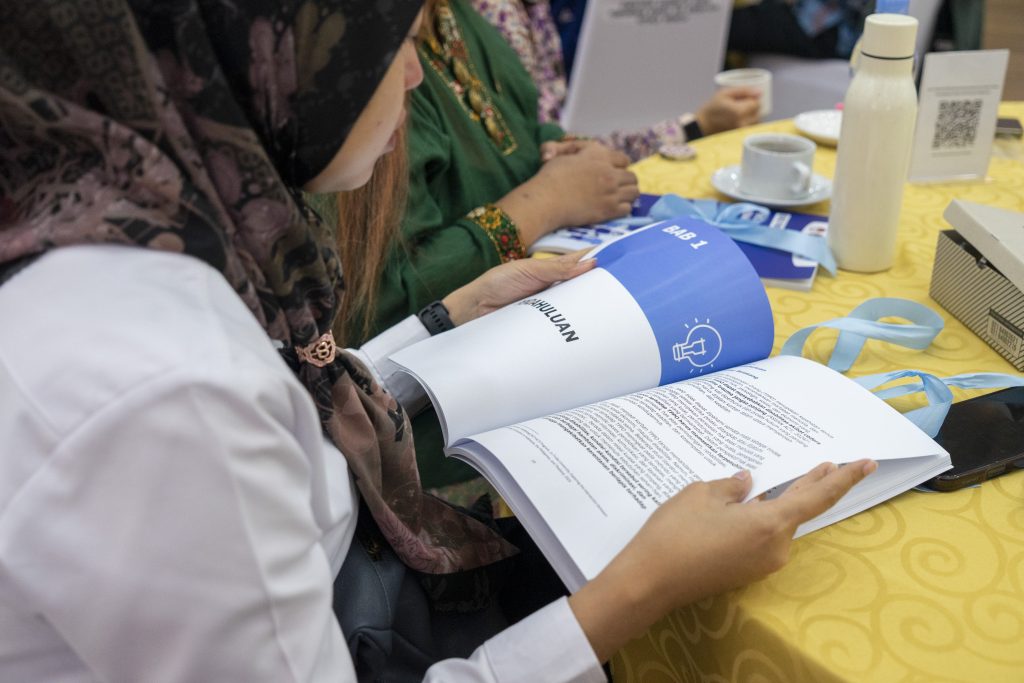
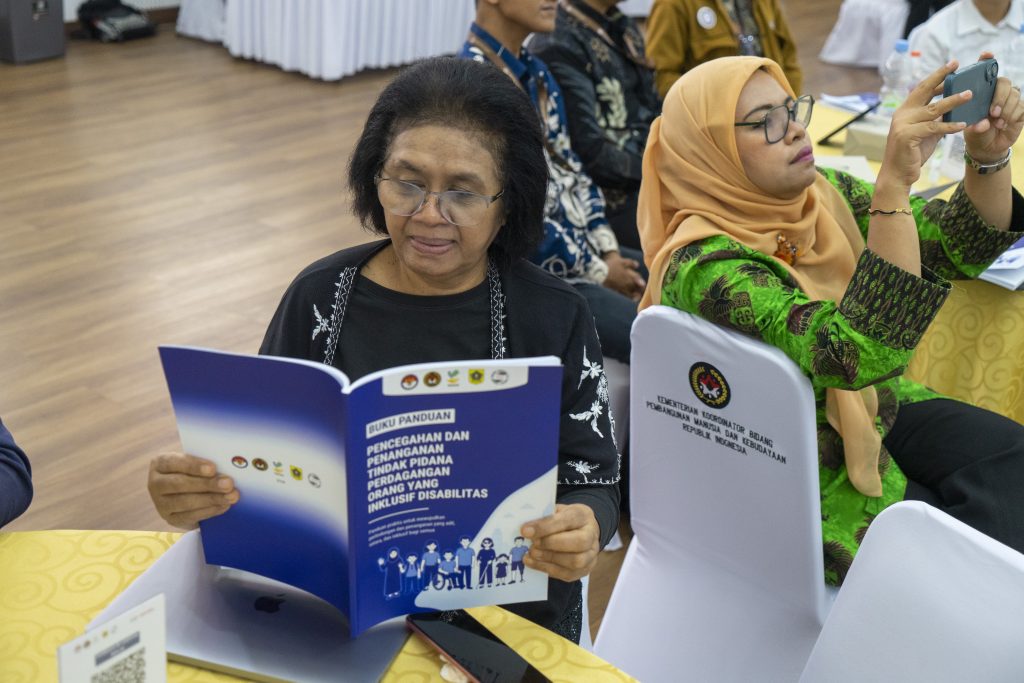
Download the Guidelines on the Disability Inclusive Prevention and Handling of Trafficking in Persons (Bahasa Indonesia only).
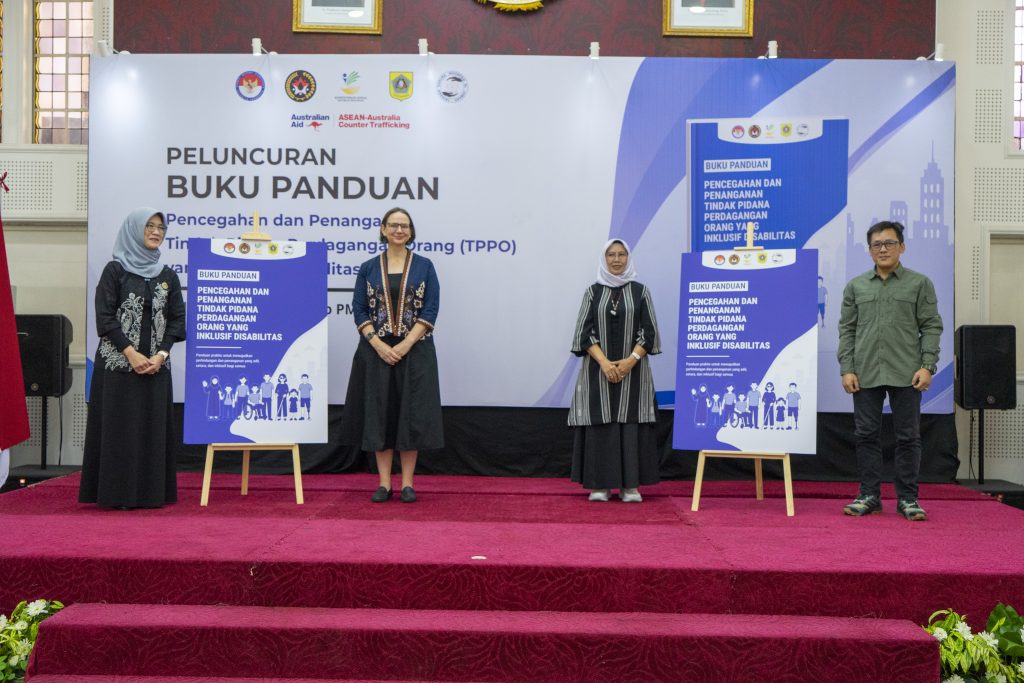
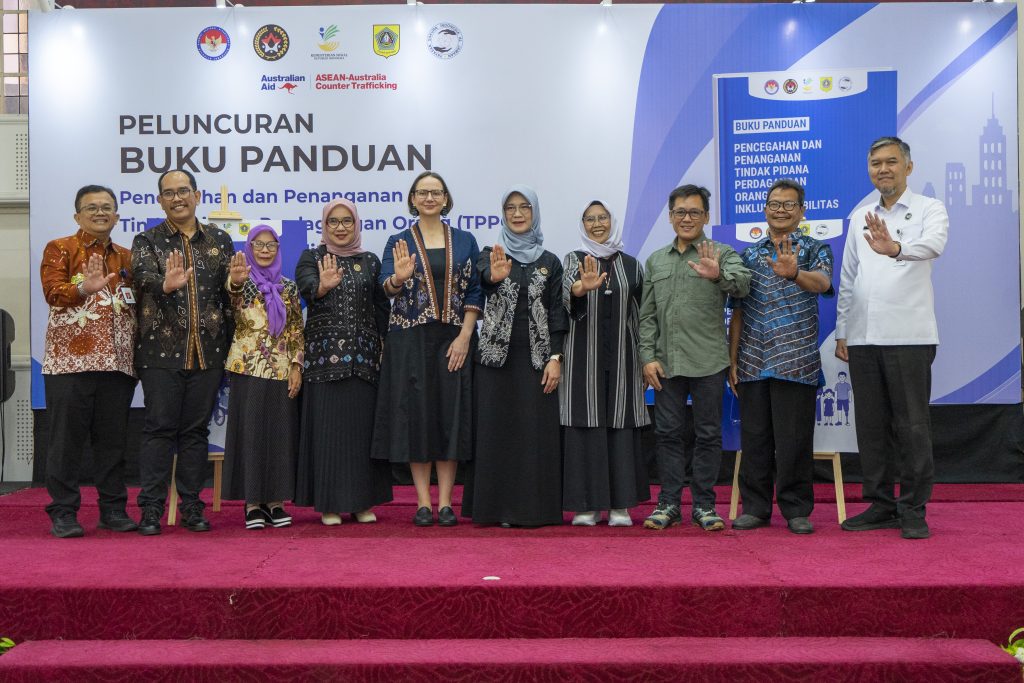
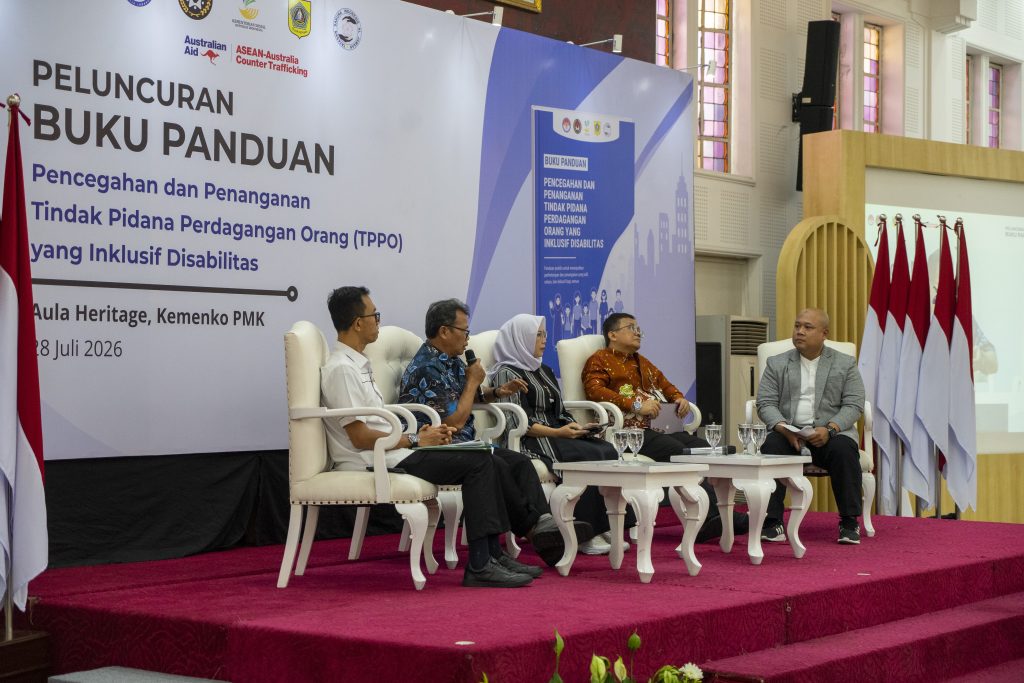
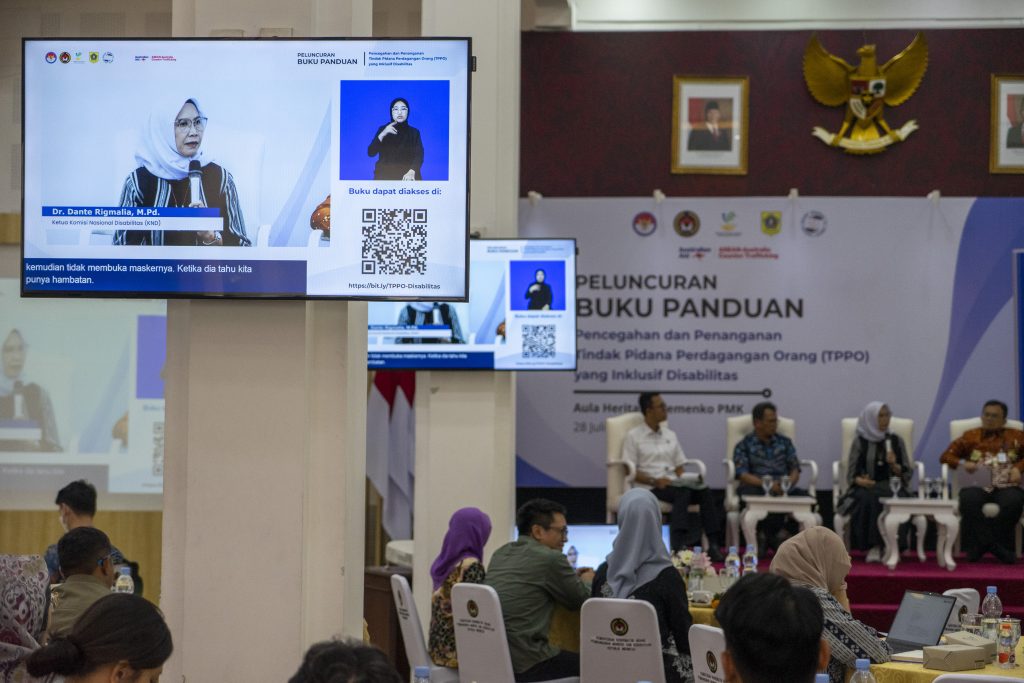
The Guidance on Disability-Inclusive Prevention and Handling of Trafficking in Persons was launched on 28 July 2026 to commemorate World Day Against Trafficking in Persons.
Led by Indonesia’s Coordinating Ministry for Human Development and Cultural Affairs in partnership with the National Commission on Disabilities, Ministry of Social Affairs, Bogor Regency Government, and the Australian Government, the launch brought together 137 participants from government agencies, organisations of persons with disabilities, civil society, victim-survivors, and development partners. The event included a panel discussion on prevention, victim support and recovery, law enforcement, and inclusion and intersectionality.
Following the launch, the Guidelines will be disseminated in Bogor Regency and nationally to support implementation among anti-trafficking task forces. Sakura will also conduct paralegal capacity-building training for 49 NGO and OPD consortium members in partnership with a legal aid organisation.