When a victim of human trafficking seeks help, the first response can make all the difference. A conversation with a police officer, social worker, healthcare provider or labour inspector may be the first step towards safety and recovery.
But for a person with a disability, including those with disabilities that may not be visible, that first interaction can be hindered by communication barriers, inaccessible services, or procedures that were never designed with their needs in mind. For example, a person with a hearing impairment may struggle to communicate if sign language interpretation is unavailable, while a person with a psychosocial or intellectual disability may be incorrectly perceived as uncooperative during screening when they simply need additional support or time.
For Good Friends Association, a Thai Organisation of Persons with Disabilities, addressing these challenges starts with a simple belief: people with lived experience should be at the centre of designing solutions.
With more than a decade of experience working on disability issues, Good Friends has become a trusted advocate for the rights and inclusion of persons with disabilities in Thailand. Through a grant supported by the Australian Government funded ASEAN-Australia Counter Trafficking (ASEAN-ACT) program, the organisation is now applying that expertise to help strengthen responses to trafficking and exploitation affecting persons with disabilities.
The initiative brings together government agencies, civil society organisations and disability advocates to better understand the risks faced by persons with disabilities to exploitation, improve data collection and victim identification, and develop more effective mechanisms to assist and protect victims with disabilities.
The need is clear. While Thailand continues to combat trafficking in many forms, there is limited understanding on its impact on persons with disabilities, making it harder for authorities and service providers to identify victims and respond effectively. Victims with disabilities often face additional challenges disclosing their experiences, understanding available services, or accessing support, increasing the risk that exploitation remains undetected.
Recognising that no single agency can solve these challenges alone, Good Friends has built a broad coalition that includes Thailand’s Ministry of Social Development and Human Security, Ministry of Justice, Ministry of Labour, Royal Thai Police, alongside disability organisations, legal experts, healthcare providers and civil society partners representing a wide range of disability groups.
“Many people assume that a person with a disability will be identified quickly because their needs are visible. The reality is often the opposite. Some disabilities are not immediately apparent. Without the right understanding and support, signs of exploitation can be missed, allowing trafficking or abuse to go unnoticed for much longer,”
explained Good Friends representative Thipapsorn Sivathorn.
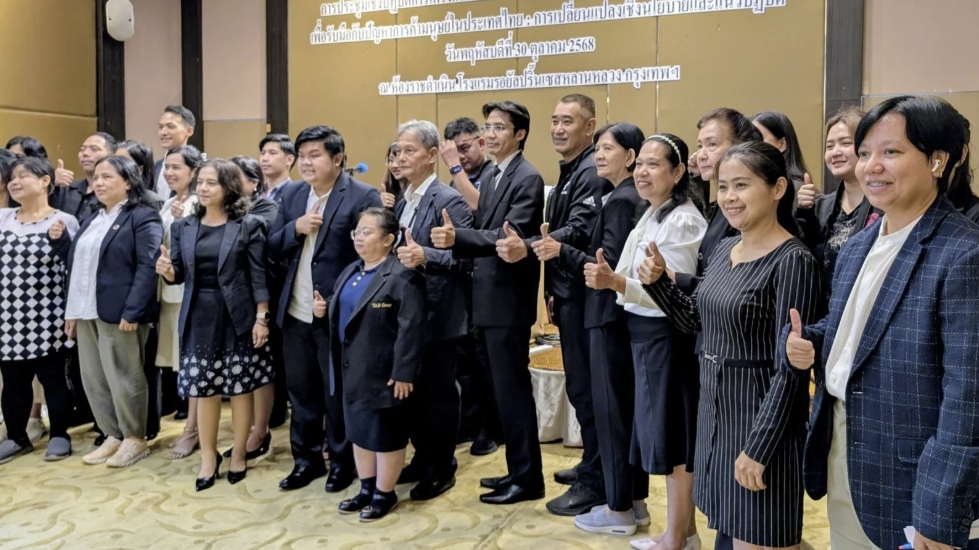
That expertise was recently put into action through a validation workshop of Thailand’s draft disability-inclusive National Referral Mechanism (NRM) operational guidelines for victims of trafficking. The guidelines have been drafted by Good Friends Association through two consultative workshops involving government agencies, disability advocates and service providers. The validation workshop provided an opportunity to test the draft in practice, identify any gaps and ensure the guidelines are practical and effective for frontline responders.
The workshop, organised by Good Friends with support from ASEAN-ACT, brought together 30 frontline practitioners, including anti-trafficking officers, screening authorities, social workers and protection specialists.
Participants were immersed in realistic scenarios that reflected the experiences of people with visual impairments, hearing and communication impairments, physical disabilities, and psychosocial or cognitive disabilities. Some scenarios highlighted how victims with invisible disabilities may be overlooked during screening or interviews if frontline responders are unfamiliar with their support needs.
A defining feature of the workshop was the involvement of experts with lived experience of disability. Drawing on their own experiences navigating public services and support systems, they helped counter trafficking practicioners understand how small adjustments, such as accessible communication, supported decision-making, or additional time during interviews, can have a significant impact on whether a victim feels safe, understood and able to access assistance.
For many participants, the experience challenged long-held assumptions.
The workshop helped identify procedural gaps, institutional barriers and opportunities to strengthen referral pathways for victims with disabilities. It also tested whether the draft guidelines could uphold important principles such as dignity, voluntary consent, trauma-informed practice, supported decision-making and reasonable accommodation.
For Good Friends, however, the workshop represents something bigger than a set of complementary guidelines.
It demonstrates the vital role that disability organisations can play in strengthening counter-trafficking responses. By contributing lived experience, community connections and specialist expertise, disability organisations can help ensure that victims with disabilities are recognised, understood and supported.
This approach reflects a growing recognition across ASEAN that effective victim protection and support requires systems that work for everyone, including persons with disabilities and others at heightened risk of exploitation. Through ASEAN-ACT’s support, lessons from Thailand’s experience can contribute to broader regional efforts to strengthen victim identification, referral and protection mechanisms that are both victim-centred and inclusive.
As Thailand develops more inclusive approaches to identifying and supporting victims of trafficking, Good Friends is demonstrating what is possible when organisations of persons with disabilities are recognised not just as stakeholders, but as essential partners in protection.
For frontline counter trafficking responders, that means better tools and stronger partnerships. For persons with disabilities, it means a greater chance of being recognised as a victim of serious crime, accessing appropriate support, and participating fully in decisions that affect their recovery and future.