Human trafficking is a classic wicked problem – complex, invisible and shaped by forces that shift faster than most development programs can keep pace with.
In a landscape like this, can any organisation genuinely drive change if its monitoring systems hear only a narrow slice of voices? And what happens when the people closest to the work – those observing positive deviance, subtle shifts, and real-time challenges – are not invited into the assessment and learning process? These questions sit at the heart of why inclusive, participatory monitoring, evaluation and learning is no longer an optional practice in international development, but an essential one.
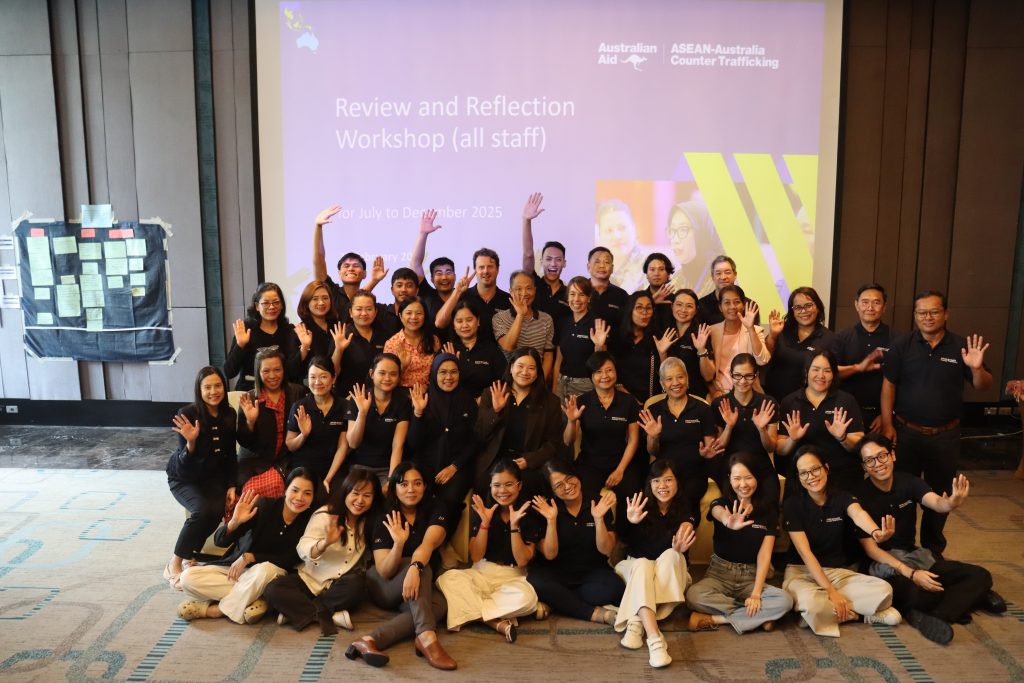
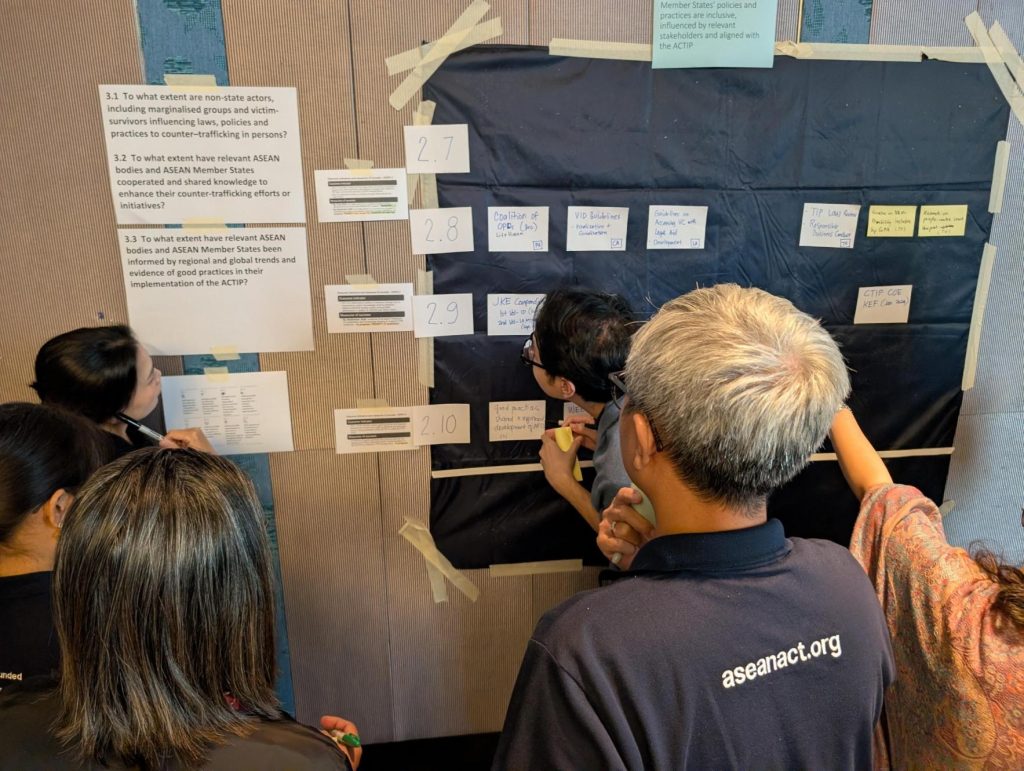
The Australian Government funded ASEAN-Australia Counter Trafficking program (ASEAN-ACT) offers an example of how this can look in practice. Each year, the program convenes its entire team – every level of staff from Cambodia, Indonesia, Lao PDR, the Philippines, Thailand, and Viet Nam – for a regional review and reflection process.
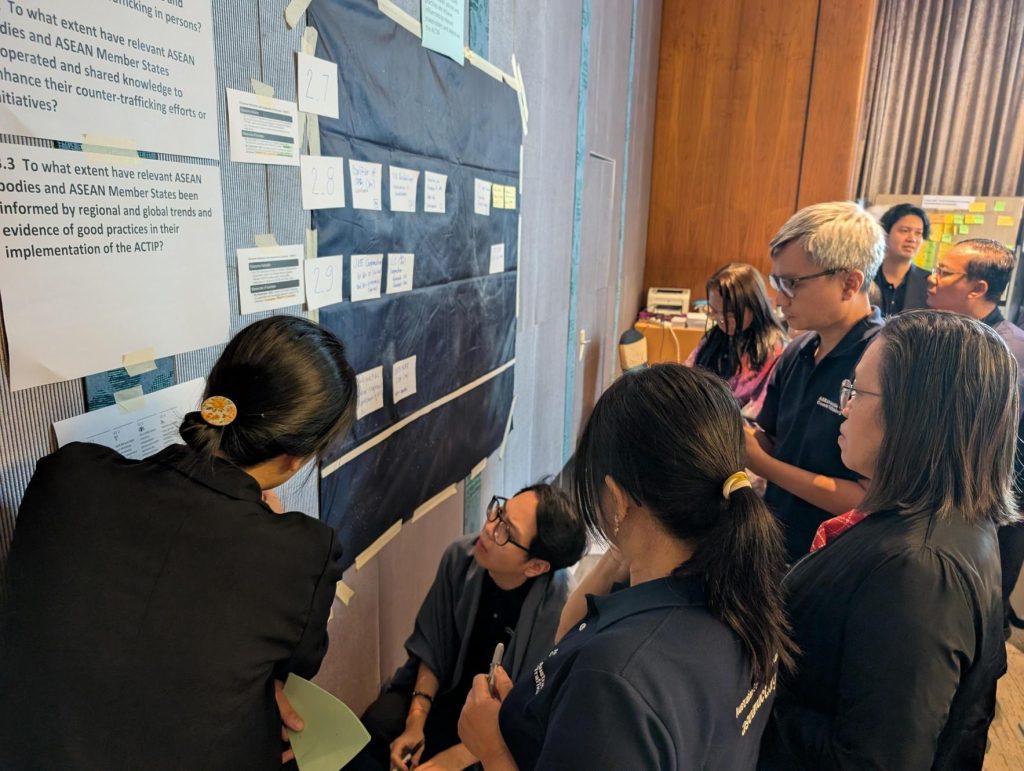
It is not a box ticking exercise to meet donor requirements. Rather, it is a deliberate pause in rapid implementation: a structured, program wide moment to make sense of shifting trafficking trends across the region, reflect on progress towards our outcomes, and test the validity of the program’s Theory of Change. Importantly, it not only informs reporting, but also planning and learning – allowing insights to be used to adjust approaches and strengthen implementation in real-time across countries and projects.
What makes this approach powerful is its inclusivity. Operational and financial staff sit together with technical specialists and senior leadership. Country teams compare experiences across borders to uncover regional patterns, common challenges and differences that confirm the importance of a country-specific and contextual approach. Insights flow upward, sideways, and across the program – when brought together, they form a picture far richer and more accurate than any external monitoring process could capture on its own.
This is where many development programs may falter. Too often, monitoring becomes the territory of a small group – the MERL unit, the senior management team, or external consultants. Reports are produced, dashboards are polished, but the deeper intelligence and tacit knowledge that sits with staff remains untapped.
ASEAN-ACT’s review and reflection process is an antidote to that drift. Because it draws on the entire program, it generates a shared understanding of progress and challenges – one grounded in lived experience, not just statistics on a page.
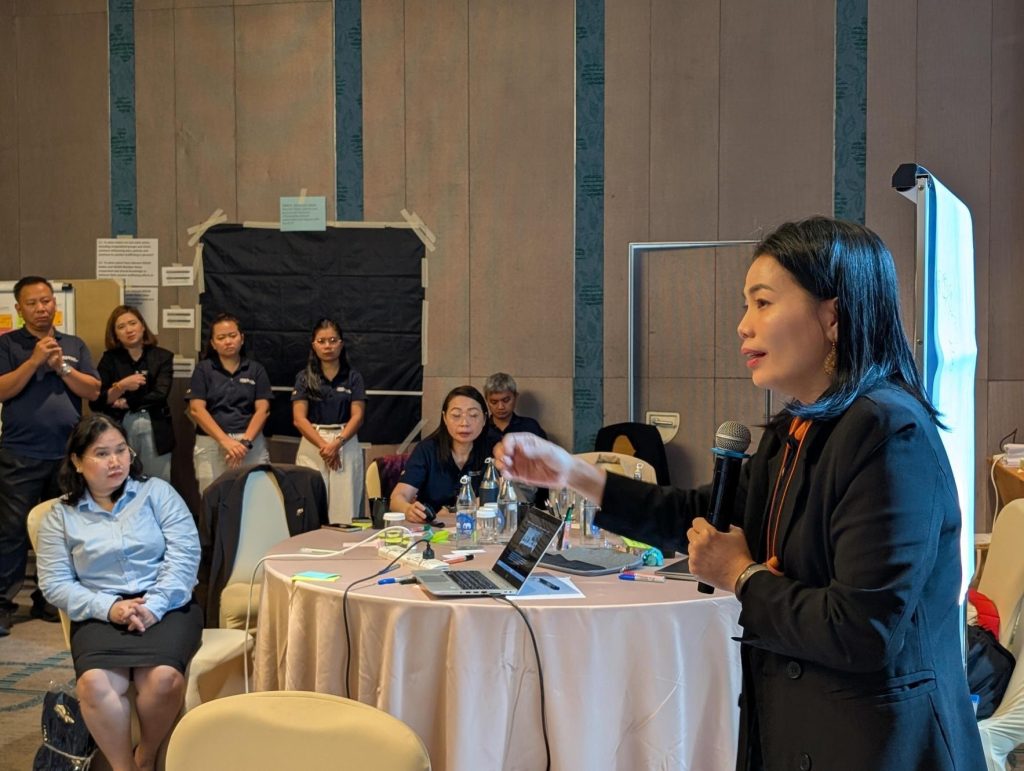
It encourages robust debate rather than polite agreement, surfacing assumptions that may no longer hold. It creates psychological safety for staff to raise concerns or propose new ideas. And, perhaps most importantly, it strengthens ownership: when everyone contributes to shaping the narrative of progress, the program’s direction belongs to everyone.
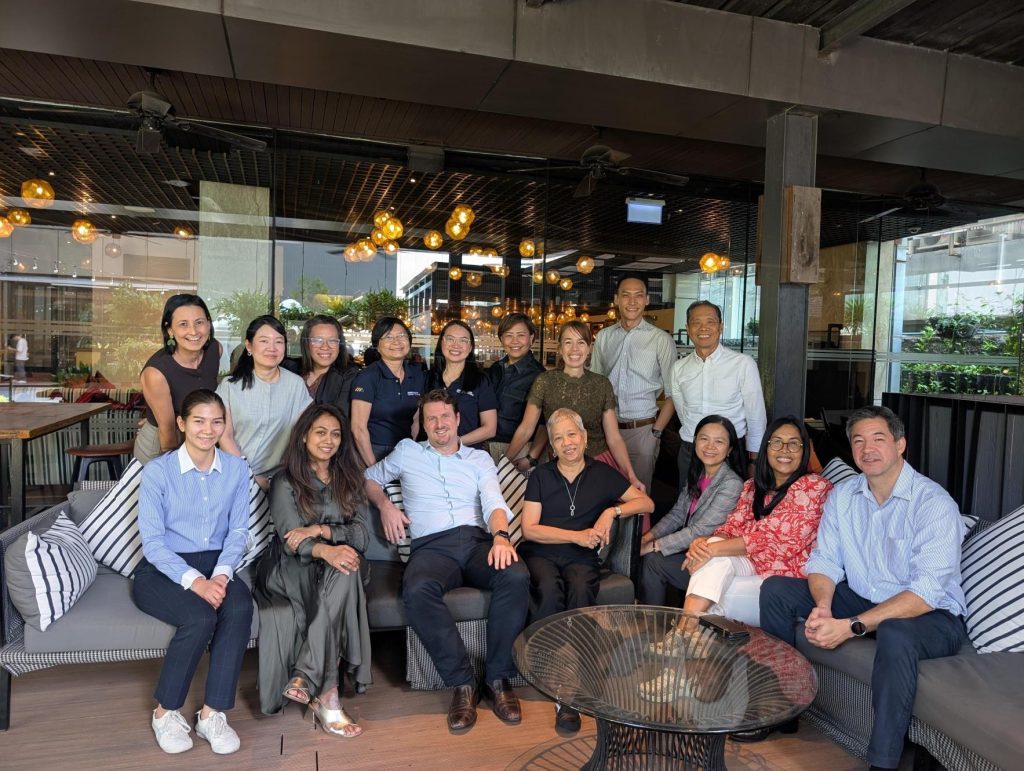
Beyond the program team, ASEAN-ACT facilitates regular review and reflection sessions with partners in each country – including government, private sector and non-government organisations. These engagements generate rich insights into how partners define success, and what it means not only to take part in a program activity but to actively drive and sustain change within their agencies, across national systems, and collectively at a regional level. By creating space for partners to articulate their perspectives, challenges, and achievements, the approach deepens understanding of what meaningful, locally-led change looks like and how best to support it.
In the Philippines, ASEAN-ACT’s primary partner – the Inter Agency Council Against Trafficking (IACAT) – has adopted this same method of collective review and reflection, integrating it into their planning, monitoring and reporting to strengthen coordinated, multi-disciplinary responses across their 28 member agencies.
Review and reflection processes also strengthen the team’s adaptive management capabilities – as human trafficking evolves quickly – shifting with technology, migration patterns, conflict, climate change and economic pressures. To understand and respond to this rapidly evolving context, we know that we need to remain agile enough to recalibrate activities, refine partnerships, and retest assumptions. This kind of program wide sensemaking builds resilience and prepares teams to work with uncertainty, not against it.
The development sector is increasingly guided by locally led development strategies that promote agency, leadership and decision-making of local actors. Participatory monitoring and collective learning are some of the important ingredients that makes these principles real. It ensures that a program is not merely documenting change but learning from it – and shaping the next phase with a full spectrum of insights from different perspectives.
The real provocation is this: What happens if we do not work this way? What risks do we create when only a fraction of the program’s intelligence is captured, analysed, and acted upon? In a sector working on some of the world’s most complex challenges, failure to build inclusive monitoring and learning systems does more than weaken reports – it weakens impact.
ASEAN-ACT’s approach to monitoring is not just a technical function, but a collective act of reflection, curiosity, and shared responsibility. It is a model worth adopting more widely, not because it is easy, but because wicked problems demand nothing less.